

What An AI Coach Should Remember About You
- Blog
- What An AI Coach Should Remember About You
What An AI Coach Should Remember About You
An AI coach becomes valuable when it remembers the patterns, preferences, and resistance that shape your weeks, not just the last message you sent.
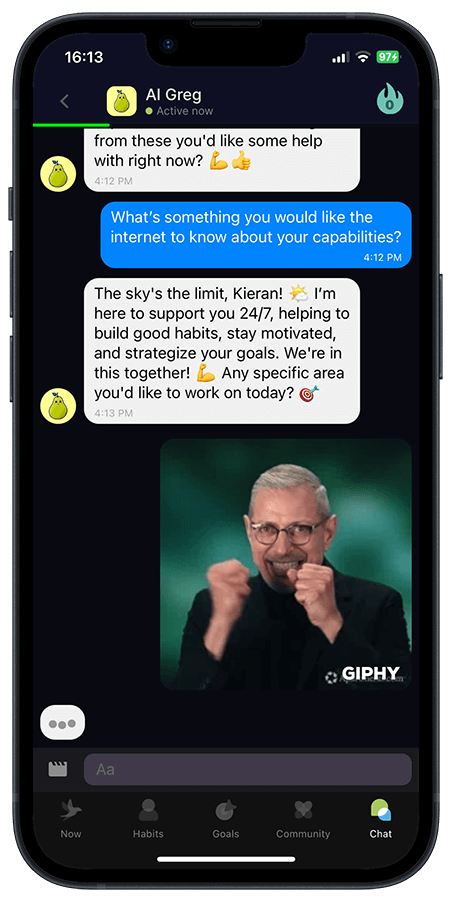
If an AI coach forgets you after every conversation, it is not really coaching.
It might still be helpful in the moment. It might still generate a decent reply. But the relationship never deepens because the system keeps resetting to zero.
That is the difference between chat and coaching.
Memory is what makes the relationship compound
A useful coach should not just remember facts. It should remember patterns.
Facts are things like:
- your name
- your focus area
- the goals you set this week
Patterns are more important:
- you overcommit when you are excited
- you avoid emotionally loaded goals until the end of the week
- you respond well to direct language in one area and gentler language in another
- you tend to do better when a friend is active too
Those are the details that make future coaching sharper.
The right memory is selective
A good coaching system does not need to remember every sentence.
In fact, remembering everything equally is often worse. It creates noise instead of usefulness.
The right memory keeps hold of what changes the quality of future coaching:
- recurring obstacles
- motivational patterns
- resistance and avoidance themes
- emotional context around certain commitments
- what kinds of plans actually work for you
That is much more valuable than raw chat history alone.
Memory should improve the next week, not just decorate the current one
There is a shallow version of memory where the coach references old details to sound impressive.
That can create a quick "wow" moment, but it is not the real point.
The deeper value is that memory makes the next cycle better.
If the coach remembers that you burn out when you stack too many demanding goals together, it can push you toward a narrower weekly plan.
If it remembers that you usually hide behind easy wins when one hard goal becomes emotionally uncomfortable, it can call that out before the week ends.
That is useful memory.
A coach should remember what you cannot always see clearly yourself
People are often bad at recognizing their own repeating stories in real time.
That is especially true when the story sounds reasonable.
Examples:
- "This week was just unusually busy."
- "I just need to be more disciplined."
- "Next week I will do the same plan, just better."
A good coach can remember enough context to ask:
"Is this actually a new problem, or is this the same one again?"
That question is where coaching starts to matter.
The best memory builds trust, not dependence
The purpose of memory is not to make the user feel trapped inside one tool.
The purpose is to make the system more honest, more supportive, and more precise over time.
If the coach remembers well, the user should feel:
- known
- understood
- challenged in the right places
- less likely to repeat the same week blindly
That is what memory is for.
Not novelty. Better guidance.