

Why Habit Trackers Fail When Life Gets Messy
- Blog
- Why Habit Trackers Fail When Life Gets Messy
Why Habit Trackers Fail When Life Gets Messy
Most habit trackers work best in ideal weeks. Real behavior change needs a system that can survive stress, avoidance, and imperfect follow-through.
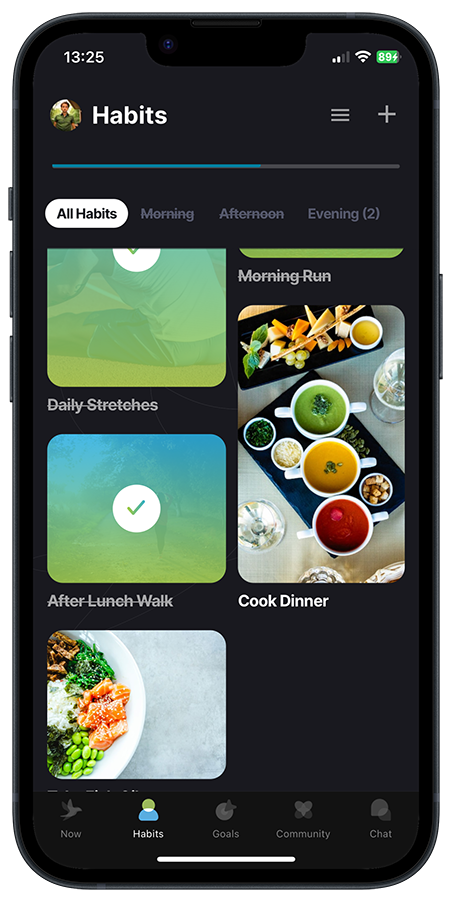
Most habit trackers are built for your best week.
They work beautifully when your sleep is good, your motivation is high, your calendar is clean, and nothing emotionally difficult is happening in the background. In that version of life, almost any system looks effective.
The problem is that behavior change is not tested in your best week. It is tested in your most ordinary and most inconvenient ones.
The failure mode is not usually the interface
People often assume they fall off because the app was not motivating enough, the streak mechanic was weak, or the reminders were too easy to ignore.
Sometimes that is true. More often, the problem is simpler.
The system assumes that recording behavior is the same thing as supporting behavior.
A tracker can tell you that you skipped the workout, missed the bedtime target, or did not write today. It cannot tell you why that pattern keeps returning. It cannot tell you whether the issue is overload, vagueness, avoidance, burnout, or a commitment that never fit your real week in the first place.
Real weeks break clean systems
When life gets messy, people do not need more logging.
They need:
- fewer commitments
- more honesty
- better reflection
- a way to reset without dragging guilt into the next week
This is where many habit trackers quietly lose people.
They let your list keep growing even when your follow-through is shrinking. They keep asking for checkmarks when what you really need is a narrower commitment and a more honest look at what happened.
The issue is usually commitment, not tracking
If you keep missing the same behavior, the problem is not always discipline.
Sometimes the problem is that you committed to too much.
Sometimes you chose goals that sounded good but were not emotionally real.
Sometimes you avoided the hardest thing all week and let easier tasks create the illusion of progress.
A tracker can store the evidence. A better system helps you interpret it.
Why weekly cycles work better
A weekly cycle forces a shape onto the mess.
You start by committing to only a few meaningful goals. You move through the week with lower friction. Then, instead of pretending next week will magically be better, you review what happened and reset with more context.
That changes the question from:
"Did I log the thing?"
to:
"Did I keep the promise I made to myself this week?"
That is a much more useful question.
Coaching matters because patterns matter
Once the week is the unit, coaching becomes more valuable than tracking alone.
A coach can help you notice:
- the weeks where you always overcommit
- the goals you keep rewriting instead of doing
- the situations where your motivation collapses
- the excuses that sound different but point to the same underlying problem
That is what messy real life demands.
Not a cleaner tracker. A more honest system.
The point is not to track more
The point is to build a rhythm that still works when the week is imperfect.
When life gets messy, the best system is not the one that collects the most data. It is the one that helps you stay honest, reduce the noise, and begin again with a little more clarity than you had before.