

Why Proactive Coaching Beats Waiting For Motivation
- Blog
- Why Proactive Coaching Beats Waiting For Motivation
Why Proactive Coaching Beats Waiting For Motivation
The moment you most need support is often the moment you least want to ask for it. That is why proactive coaching matters.
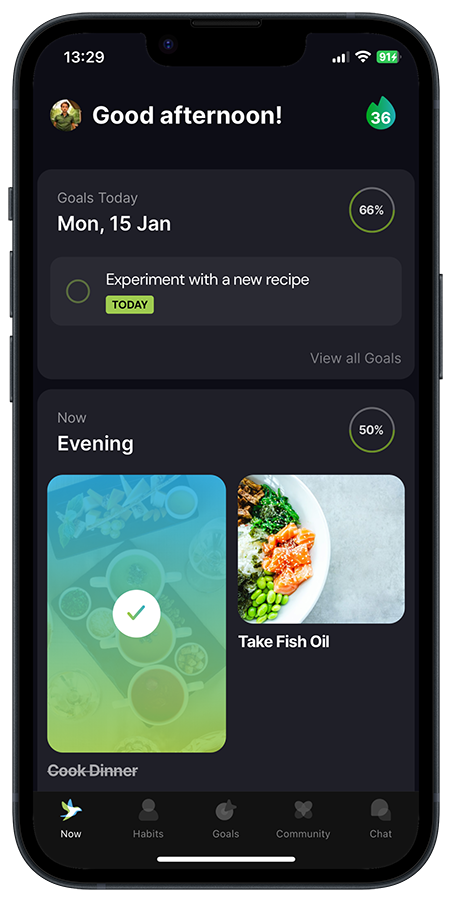
Waiting for motivation is one of the quietest ways a week falls apart.
Not because motivation never matters, but because the exact moment you most need support is often the same moment you are least likely to go looking for it.
That is why proactive coaching matters.
Most tools are passive by default
They wait for you to open them.
They wait for you to remember your goals.
They wait for you to feel bad enough to ask for help.
By the time that happens, the week may already be sliding.
Passive systems can still be useful, but they create a hidden burden: the user has to keep carrying the system back into attention.
That is harder than it sounds, especially in the middle of stress, distraction, or avoidance.
The drop usually happens before the miss is obvious
Most weekly failures do not begin with a dramatic collapse.
They start with small signs:
- a hard task keeps getting pushed one day later
- check-ins become vaguer
- the plan quietly gets overloaded
- the user disengages emotionally before they disengage behaviorally
This is where proactive coaching earns its value.
If the system can notice the early pattern and step in, it can change the week while there is still something to save.
Asking for help is often the hardest part
People like to imagine that if they really needed support, they would ask for it.
In reality, many people do the opposite.
When they feel behind, ashamed, confused, or resistant, they often withdraw. They delay opening the app. They avoid the goal. They postpone the review. They wait for a clean restart that never comes.
That is exactly why a coach should sometimes initiate.
The product should not always wait politely while the user disappears.
Proactive does not mean noisy
Good proactive coaching is not spam.
It should feel timely, relevant, and earned.
The point is not to send more messages. The point is to send the right message at the moment where it can still change behavior.
That might mean:
- a reminder when the week is drifting
- a prompt when a commitment has gone untouched for too long
- a reflection nudge before the cycle closes
Done well, that creates a feeling many people are missing from digital tools:
"Something is keeping up with me."
Motivation is unreliable. Systems are not.
The strongest argument for proactive coaching is simple:
behavior change should not depend on the user always feeling ready.
Some weeks the user will be motivated.
Some weeks they will be distracted, discouraged, or avoidant.
A coaching system that can show up during both kinds of weeks is more valuable than one that only shines when the user brings all the energy themselves.
That is what proactive support changes.
It reduces the gap between intention and follow-through by showing up before the week is fully lost.